 Business License

Best Porcelain Tiles for Distributors That Sell
The best porcelain tiles for distributors are not simply the lowest-priced products on a supplier’s list. They are the lines that give dealers a reason to win business without cutting margins to the floor: recognizable design, dependable technical performance, manageable inventory risk, and a supply program that does not disappear when a customer needs a second order.
For many distributors, conventional glossy tile in crowded sizes has become a price-war category. The catalog may look full, but the products are easily compared, easily substituted, and often sold by several competitors in the same market. A stronger portfolio is built around porcelain products with a clear position in renovation, residential, hospitality, and design-led commercial work.
What Makes the Best Porcelain Tiles for Distributors?
The right assortment depends on a distributor’s customer base, warehouse model, and local design preferences. Still, the most commercially useful tile lines tend to share several qualities. They offer a surface look that is difficult to replace with a generic product, formats that fit real installations, and a pricing structure that leaves room for the distributor, retailer, installer, and project buyer.
Supply continuity matters just as much as appearance. A tile line can win an opening order and still create a costly problem if matching material is unavailable for extensions, repairs, later phases, or repeat projects. Distributors should ask about production continuity, batch controls, packing consistency, lead times, and the supplier’s ability to support replenishment rather than focusing only on the first container price.
The strongest programs also avoid unnecessary complexity. A catalog with dozens of nearly identical marble looks can tie up cash and confuse sales teams. A focused collection with distinct colors, clear applications, and a logical sample strategy is easier to sell from a showroom, through dealer networks, and to project specifiers.

Rustic Porcelain Tiles Create Margin Beyond Commodity Lines
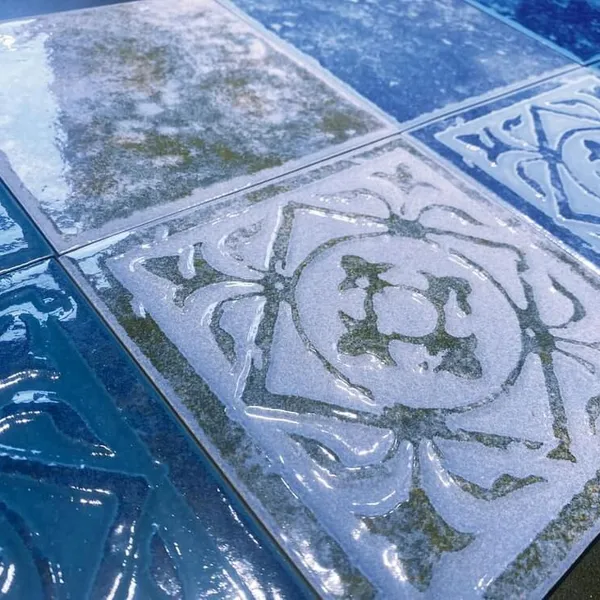
High-end rustic porcelain is one of the most practical categories for distributors seeking differentiation. Unlike highly uniform, rectified commodity tile, a well-developed rustic collection carries visual depth through texture, tonal movement, edge character, and a more natural relationship to stone, clay, cement, or aged surfaces. It supports a premium story without requiring fragile natural materials or complicated maintenance expectations.
Small and medium formats are especially relevant for renovation work. Sizes up to 600x600 mm work across kitchens, bathrooms, entryways, patios, villas, restaurants, and older homes where large panels may be impractical to transport, cut, or install. They also fit projects where installers need flexibility around uneven substrates, transitions, drains, and existing room layouts.
Non-rectified rustic tiles deserve particular attention. Their softened, traditional edge profile can feel more authentic in antique, Mediterranean, farmhouse, heritage-inspired, and renovation-focused interiors. This is not a substitute for every project. Sharp contemporary spaces may call for rectified large-format products instead. But for distributors serving renovation contractors and homeowners who want warmth rather than a sterile grid, rustic porcelain creates a meaningful point of difference.
Classic antique porcelain floor tile can be particularly effective in renovation programs and living spaces designed for older residents. The visual character helps a new floor feel established rather than newly manufactured. Performance requirements should still be selected project by project. Confirm slip resistance, surface texture, maintenance needs, and applicable local requirements before recommending any floor tile for wet areas or accessibility-sensitive environments.
What to Look for in a Rustic Collection
A sellable rustic line needs more than a distressed graphic. Check the variation across pieces, the quality of the glaze and texture, the consistency of calibration, and whether the color range reflects current local demand. Neutral clay, warm gray, soft beige, weathered stone, and natural earth tones often have broader commercial life than highly specific fashion colors.
Distributors should also examine how the product is packed and presented. Clear shade information, accurate sample boards, room-scene photography, and consistent carton labeling reduce friction for dealers and installers. A premium product loses value quickly when a customer cannot understand what they are ordering or whether separate cartons belong to the same shade range.
Ultra-Thin Porcelain Panels Win Architectural Projects
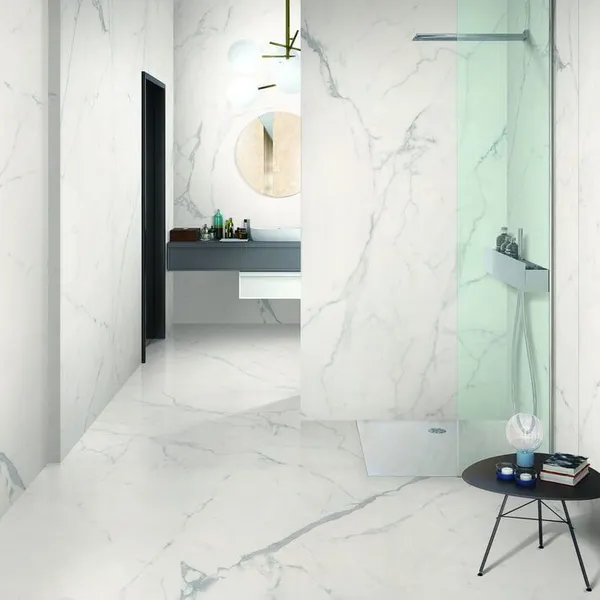
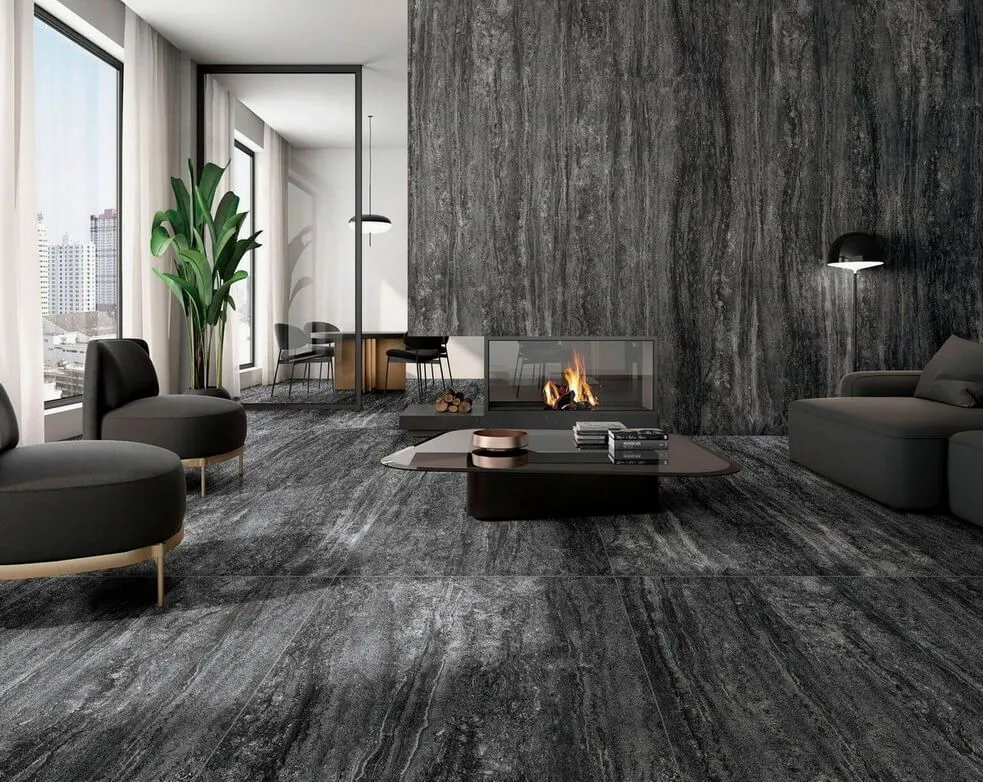
Large-format ultra-thin porcelain panels serve a different but equally valuable role. In a 1000x3000x4.5 mm format, panels can create a continuous, high-impact surface with fewer grout lines. They are suited to feature walls, bathrooms, kitchens, furniture surfaces, hospitality interiors, retail spaces, and renovation projects where weight and thickness are major considerations.
For a distributor, panels are not a volume replacement for every standard floor tile. They require specialized handling, storage, cutting capability, installer education, and careful delivery planning. Those requirements are the trade-off. They also create a barrier to entry for competitors that only stock basic tile, allowing a capable distributor to participate in more design-led and specification-driven work.
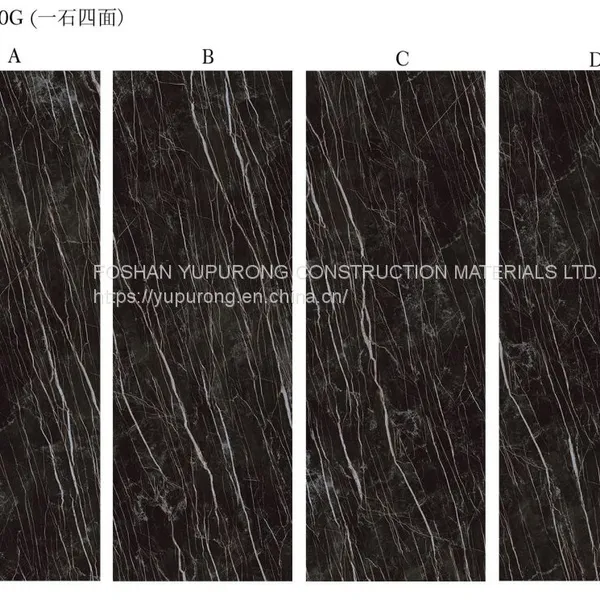
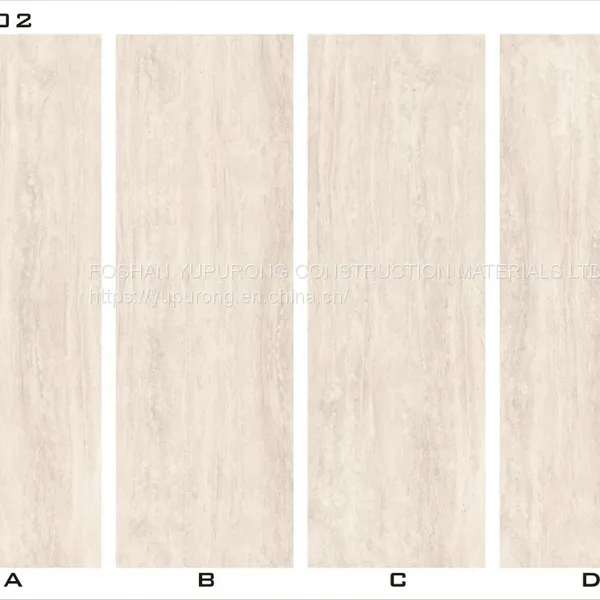
The most effective panel collections combine convincing stone, marble, concrete, metal, or artistic surface designs with reliable flatness and production control. A beautiful slab image is not enough if the material is difficult to fabricate, inconsistent between lots, or poorly protected during shipment. Before adding panels, assess whether your market has qualified fabricators and installers. If it does, panels can become a strong project category with higher order values and better showroom impact.
Sell Panels as a System, Not a Single SKU
Panel sales work best when the distributor supports the full decision process. That means communicating recommended applications, handling expectations, cutting and installation considerations, and compatible design options. Sales teams should qualify projects early: Is the panel for a wall, a vanity, a shower surround, a kitchen surface, or a furniture application? Who will transport and fabricate it? What lead time is acceptable?
This approach prevents a common mistake: selling a large panel on visual appeal alone, then discovering that the contractor lacks the equipment or experience to install it properly. Better qualification protects the customer relationship and the distributor’s reputation.
Build a Portfolio Around Applications, Not Random Formats
Distributors frequently inherit catalogs built around whatever a factory had available at the time. That approach produces overlap, dead inventory, and weak sales messaging. A more profitable method is to organize porcelain selections around the projects buyers actually bring through the door.
A renovation-focused range may center on rustic floor tile, wall tile, coordinating trims, and manageable sizes. A premium residential range can pair warm stone looks with statement panels for baths and kitchens. A commercial or hospitality program may prioritize durable neutral surfaces, repeatable supply, and formats that help contractors work efficiently. The objective is not to stock every look. It is to cover high-value applications with products that do not compete directly with each other.
Consider the role of each collection before purchasing. Some items should generate regular dealer orders. Others should operate as showroom-led products that bring architects, designers, and homeowners into higher-value conversations. A panel may not turn as often as a standard-format floor tile, but it can help a distributor win a full kitchen, hotel, or villa package.
Supplier Reliability Is Part of the Product
Tile distributors do not sell porcelain alone. They sell confidence that material will arrive in the expected condition, within a workable time frame, and with the same character shown in the sample. When supply fails, the dealer carries the customer complaint, the contractor delay, and often the cost of a rushed replacement.
Evaluate prospective suppliers on practical operating questions. Can they maintain a collection rather than constantly replacing it? Can they provide accurate production and loading schedules? Do they understand export packing for containers and fragile large-format materials? Are they willing to support private-label programs, market-specific colors, or exclusive agency arrangements when the order potential justifies it?
Flexibility can be a major commercial advantage. Zero-MOQ or low-commitment starting options allow distributors to test a design-led line without filling a warehouse with unproven inventory. At the same time, a distributor should distinguish flexibility from instability. The best partner can accommodate a measured launch while still providing a credible continuity plan once the collection gains traction.
YUPURONG focuses on this balance by pairing Italian-grade design direction with Chinese manufacturing efficiency, including premium rustic porcelain formats and 1000x3000x4.5 mm ultra-thin panels. For distributors, the commercial value is not simply a lower purchase price. It is access to differentiated surfaces, OEM and ODM possibilities, and a sourcing model designed around repeat supply and project needs.
Choose Products Your Sales Team Can Defend
A distributor’s most profitable porcelain tile is the one a salesperson can explain in under a minute. They should know why the surface looks different, where it performs best, what installation considerations apply, how it compares with generic alternatives, and why the price is justified.
Before committing to a collection, put samples in front of your sales team and a few trusted customers. Ask which projects they can picture using it. Ask what competing product they would replace. If the answer is vague, the collection may be attractive but commercially unfocused. If they immediately see a renovation, boutique hospitality, villa, kitchen, or bathroom opportunity, the product has a clearer path to market.
The next container should not be chosen solely for its factory price. Choose the porcelain lines that give your customers a better finished space and give your business a defensible reason to earn more on every sale.
Recently Posted
-
Anti-Slip Floor Tiles for Aging People Living Safely
September 2, 2026A bathroom floor can look refined, drain correctly, and still create a serious risk if its surface becomes slick when wet. For pro Read More
 -
3000x1000x4.5mm Ultra-Thin Porcelain Panels for Modern Renovation
August 19, 2026If you work with commercial renovation, high-rise retrofits, or large-scale interior projects, you already know how quickly materi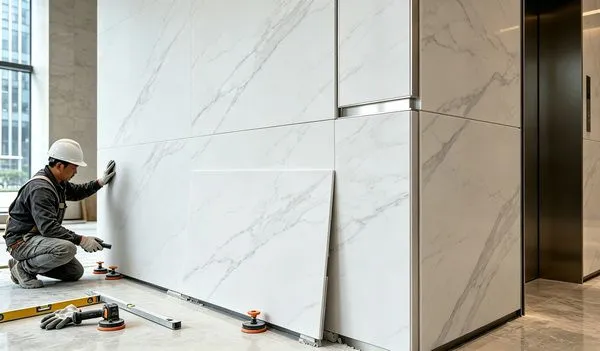 Read More
 -
Are Non Rectified Tiles Better for Tile Projects?
August 17, 2026A 2 mm difference at the tile edge can change a project's visual character, installation speed, grout specification, and even Read More
 -
Porcelain Tiles for Villa Projects That Protect Margin
August 13, 2026A villa tile package is rarely lost because the surface was technically acceptable. It is lost when a developer sees the same gene Read More

Contact Us
Recommended Products
-
 R10 Anti Slip Marble Design Porcelain Floor TilesUS$ 6.80 - 12.80MOQ: 1200 Square Meters
 -
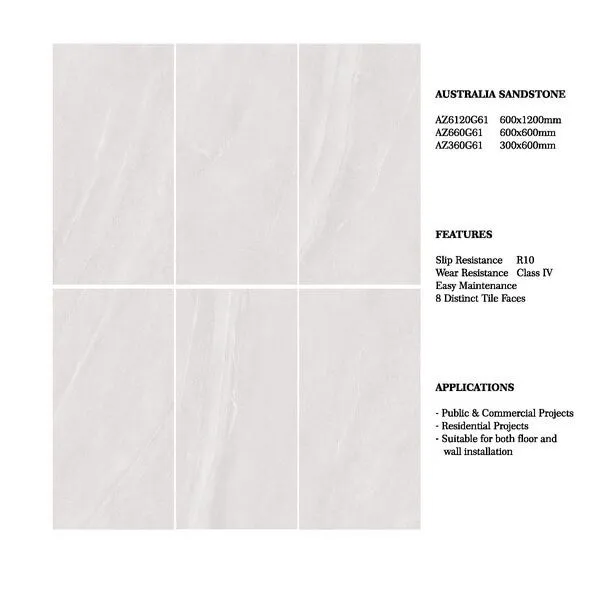
R10 Anti Slip Australia Sandstone Porcelain Floor TilesUS$ 6.80 - 12.80MOQ: 1200 Square Meters
-
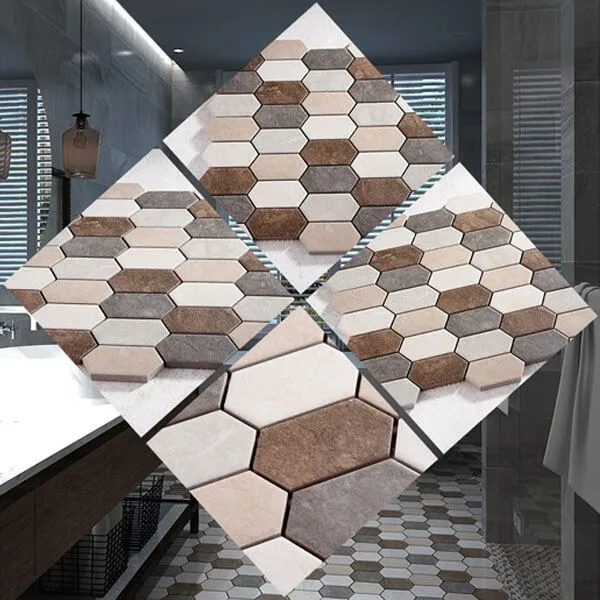
Honeycomb Porcelain Mosaic Tiles for High End Bathroom | Foshan YUPURONGUS$ 23 - 35MOQ: 30 Square Meters
-
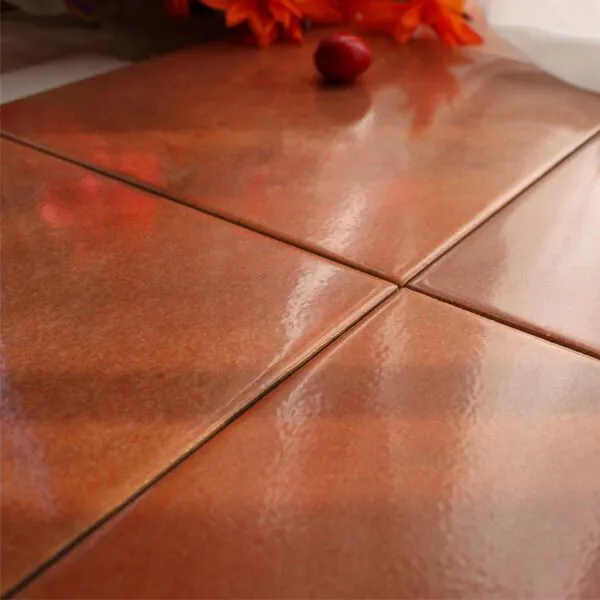
Premium 200x200mm Glossy Glazed Porcelain Wall Tiles | Italian Quality & Chinese ManufacturingUS$ 13.8 - 23MOQ: 100 Square Meters
-
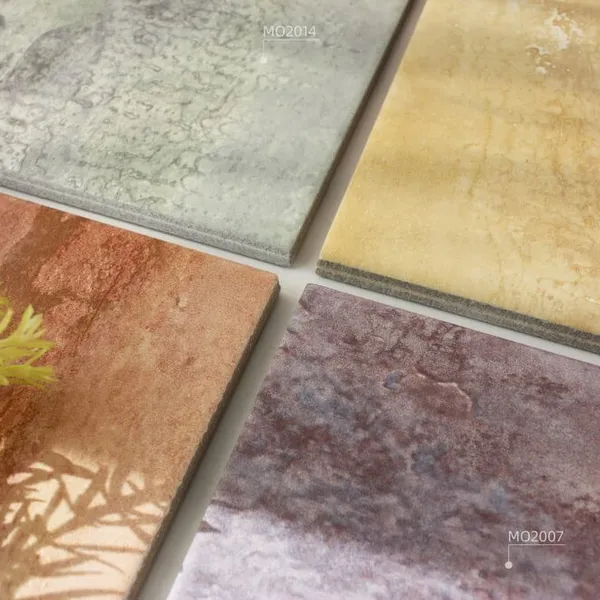
Premium 200x200mm Matte Glazed Porcelain Tiles | Italian Quality & Chinese ManufacturingUS$ 13.8 - 23MOQ: 100 Square Meters
-
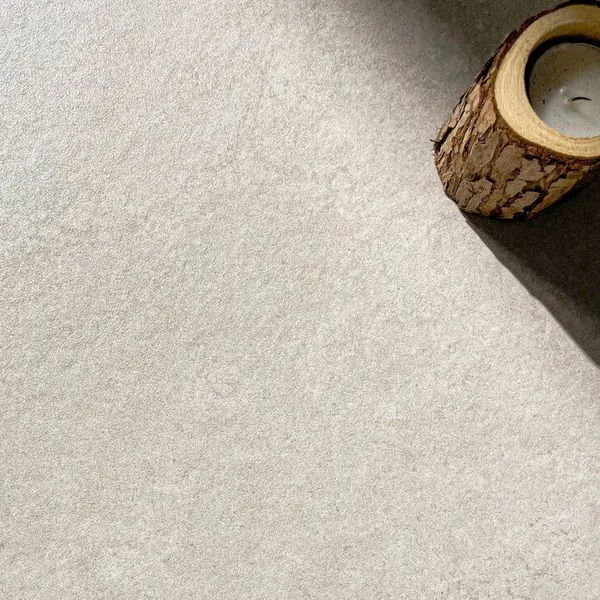
MARRAKECH Series Premium Pressed Edge Antique Porcelain Floor Tiles | FOSHAN YUPURONGUS$ 13.80 - 25MOQ: 100 Square Meters
-
LOFOTEN Series Premium Non-rectified Antique Porcelain Floor Tiles | FOSHAN YUPURONGUS$ 13.80 - 25MOQ: 100 Square Meters
-
Prague Series Premium Non-rectified Antique Porcelain Floor Tiles | FOSHAN YUPURONGUS$ 13.80 - 25MOQ: 100 Square Meters
-
Luxury Red Marble Large Format Thin Porcelain Tile From ChinaNegotiableMOQ: 1 Piece
-
Solid Color 1000x3000x4.5mm Matte Slim Porcelain PanelNegotiableMOQ: 1 Piece


-
Luxury 6x6 / 150x150mm Porcelain Swimming Pool Tiles | Italian QualityNegotiableMOQ: 1 Square Meter
-
Exclusive Pearl Series 1000×3000×4.5mm Large-Format Thin Porcelain SlabsNegotiableMOQ: 1 Piece
-
Line Series Travertine Design Thin Porcelain 1000x3000x4.5mm | Foshan YUPURONGNegotiableMOQ: 1 Piece
-
NEBULA Series (BNB) Matt Plain Thin Porcelain Sheet 1000x3000x4.5mmNegotiableMOQ: 1 Piece
-
Gray Connected Veins Large Format Thin Porcelain Panel 3000x1000mm From ChinaNegotiableMOQ: 1 Piece

-
Premium White Cararra Large Format Thin Porcelain Slab From ChinaNegotiableMOQ: 1 Piece
-
Premium Matte Black Marble Large Format Thin Porcelain Panel 3000x1000mmNegotiableMOQ: 1 Piece
-
Premium 150x150mm Porcelain Swimming Pool Tiles From Foshan YUPURONGNegotiableMOQ: 1 Square Meter
-
YUPURONG 1000×3000×4.5mm Matte Ultra-Thin Porcelain Panel - Light Beige Travertine DesignUS$ 30 - 45MOQ: 100 Square Meters
-
Top Quality Wood Like Large Format Thin Porcelain Panel From ChinaUS$ 30 - 45MOQ: 100 Square Meters